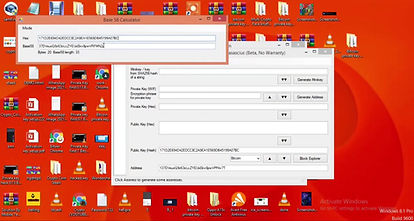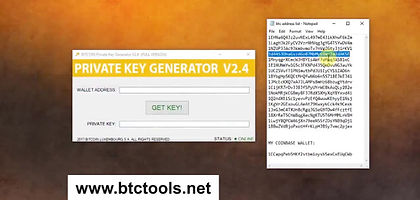
BTC Private Key Finder Tool by btctools
What is a Bitcoin private key?
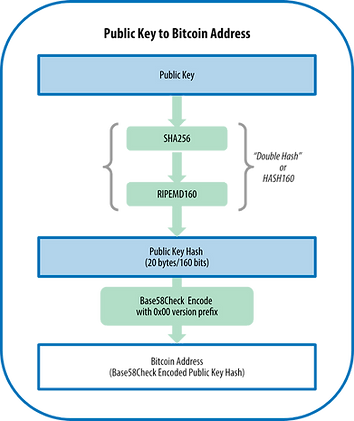
Every Bitcoin address relies on a secret key, which is used to derive the corresponding public key.
Holding the Bitcoin private key for an grants you complete control over it, enabling you to send and receive funds.
A Bitcoin private key is a confidential 256-bit number that allows users to manage their Bitcoin assets. It is essential for signing transactions and verifying the sender's legitimacy, ensuring secure transfer of funds. Keeping your private key secure is paramount, as anyone with access to it can control the associated Bitcoin address and its funds. Typically, Bitcoin wallet software generates the private key upon creating a new address. If you need assistance with recovering your private key, the btctools official site offers the btc private key finder tool from btctools, helping you regain access to your wallet and funds effectively.
It's advisable to back up your key and store it securely, such as on an encrypted USB drive in a safe. Some wallets also offer passphrase protection added security. Remember, if you lose your private key, recovering it is impossible, and the Bitcoins linked to that address will be lost permanently, highlighting the importance of safeguarding it.
_11zon.webp)
How can I locate my Bitcoin private key?
You can definitely recover your Bitcoin address private key if: - You've forgotten or accidentally deleted it from your local storage. - You've faced a hardware or software malfunction resulting in a lost private key. - Your wallet is filled with non-spendable coins that you'd like convert into usable cryptocurrency. - You've scammed by a BTC investment or company, losing your funds. - You need to retrieve coins sent to an incorrect address. Any of these situations can pose challenges BTC holders. Fortunately, our BTC key finder can assist you in retrieving your coins and restoring access to your wallet effortlessly.


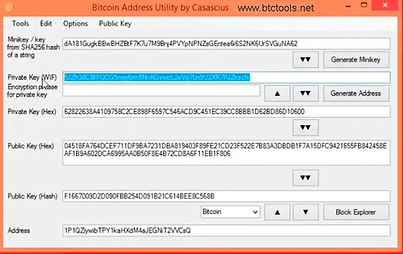
Bitcoin private key finder
V3.0

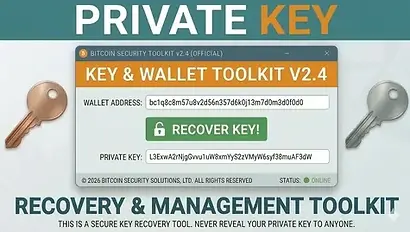
Bitcoin private key generator
V2.4


How to use Bitcoin Private
Key finder software?
You need neither out-of-the-ordinary coding skills nor any wallet-related sensitive information to run our Btc private key finder software. It’s built for all and doesn’t even require you to complete a tutorial.
To recover your private key with our software, make sure to:
-
Have your BTC wallet address at your fingertips.
-
Download and launch our key generator.
-
Follow the intuitive recovery process until you make it to the final step.
Copy your newly restored private key in the decimal, hexadecimal, or WIF form
You can get the private key you need with btc key finder software
Even though recovery cases aren’t the same, our software can salvage most private keys in 10 minutes, tops. You will get access to your crypto by the time you finish your coffee.
How to use a bitcoin private key?
Understanding Bitcoin Private Keys
A Bitcoin private key is essentially your digital signature—it's a secret 256-bit number (typically represented as a 64-character hexadecimal string or in Wallet Import Format, WIF) that proves ownership of bitcoins associated with a specific address. It's like the key to a locked mailbox: anyone can deposit funds (using the public address), but only you, with the private key, can withdraw or spend them. Losing it means permanent loss of access to your funds; sharing it means anyone can steal them.Private keys are the foundation of Bitcoin's security via elliptic curve cryptography (ECDSA on the secp256k1 curve).
You don't "use" them directly in daily life—instead, they're handled by wallets to sign transactions. Never handle them manually unless you're a developer. Below, I'll outline safe, practical ways to use one.
Step 1: Generate a Private Key (If Starting Fresh)Don't reuse old or untrusted keys—generate a new one securely:
-
Use a trusted tool like Bitaddress.org (offline mode) or a hardware wallet.
-
For high entropy, avoid manual methods like coin flips; rely on cryptographic randomness.
-
Result: A random 256-bit number, e.g., E9873D79C6D87DC0FB6A5778633389F4453213303DA61F20BD67FC233AA33262 (hex) or WIF like 5Kb8kLf9zgWQnogidDA76MzPL6TsZZY36hWXMssSzNydYXYB9KF.
Pro Tip: Use hierarchical deterministic (HD) wallets (BIP 32) that derive multiple keys from a single seed phrase (12-24 words)—easier to back up.
Step 2: Import a Private Key into a WalletTo access funds tied to an existing private key, import it into a secure wallet. This lets you view balances, receive, and spend without exposing the key.
-
Steps in Electrum (Recommended for Beginners):
-
Download from electrum.org (verify signature).
-
Create new wallet > "Import Bitcoin addresses or private keys."
-
Paste WIF/hex key > Set password > Scan blockchain for balance.
-
-
Warning: Only import on a clean, malware-free device. If compromised, sweep funds immediately to a new address.
Step 3: Use It to Sign Transactions (Spend/Receive)Once imported:
-
Receive Funds: Share the derived public address (starts with 1, 3, or bc1). No private key needed—it's public.
-
Spend Funds:
-
In your wallet, select "Send" > Enter recipient address and amount.
-
Wallet uses the private key to create a digital signature (proving ownership without revealing the key).
-
Broadcast the signed transaction to the Bitcoin network—miners verify and add it to the blockchain.
-
-
Example: To send 0.1 BTC, the wallet hashes the transaction data, signs it with your private key, and unlocks the "locked" output from a previous deposit.
This process ensures only you control the funds, as the signature mathematically links to your public key.Security Best Practices: Keep It Safe or Lose EverythingPrivate keys are irrecoverable—Bitcoin has no "forgot password" option. Here's how to protect them:
-
Offline Storage (Cold): Write on paper/metal (e.g., engraved plates) or use air-gapped hardware. Store in a safe or safety deposit box (but avoid banks if paranoid about insiders).
-
Online Storage (Hot): Use reputable wallets with 2FA; enable multi-sig for high value.
-
Backups: For HD wallets, back up the seed phrase only—never the raw key. Test recovery periodically.
-
Common Mistakes to Avoid:
-
Never share digitally (email, chat—even encrypted can leak via backups).
-
Don't import untrusted keys; they could be rigged for theft.
-
Avoid address reuse—increases privacy risks.
-
Use passphrase protection (BIP 38) for extra layers.
-
-
If Compromised: Immediately sweep all funds to a new address using an offline wallet.
For developers: Use libraries like Python's ecdsa to sign programmatically, but that's advanced.This isn't financial advice—crypto is volatile and risky. Start small, DYOR (Do Your Own Research), and consider consulting experts for large amounts. If you have a specific scenario (e.g., importing into Ledger), provide details for tailored steps!